2026 Top Marble Cutting Disc Types for Global Buyers

Choosing the right Marble Cutting Disc can determine cutting speed, edge quality, worker control, and project cost. Global buyers face many options, including turbo-rim, continuous-rim, segmented, and electroplated designs. Each type behaves differently on Carrara marble, engineered stone, limestone, and dense architectural slabs.

Stone-tool engineer Dr. Luca Bianchi explains, “A diamond disc must match the stone, the machine, and the operator’s cutting rhythm.” This practical view matters. A disc that cuts quickly on a bridge saw may perform poorly on a handheld grinder. Water cooling also changes results. It reduces heat, limits dust, and helps protect the bond. Yet, water alone cannot correct an unsuitable diamond specification.

This guide examines the 2026 Marble Cutting Disc types most relevant to international buyers. It compares rim structure, diamond concentration, cutting smoothness, lifespan, and application range. Readers will also find details about arbor sizes, maximum operating speed, wet and dry cutting, and packaging checks. Small details matter. A warped disc can create vibration and uneven edges. An unclear speed label creates avoidable risk.

Some recommendations remain conditional. Stone hardness varies between quarries. Machine power varies between workshops. Buyer expectations vary even more. Therefore, the “best” disc is rarely universal. Experienced purchasers should test samples, inspect the finished edge, and record cutting meters per disc. That evidence is more useful than a bold catalog claim. This overview offers a practical starting point for safer, more consistent, and cost-aware purchasing decisions in 2026.
2026 Top Marble Cutting Disc Types for Global Buyers

Marble Cutting Disc Basics and Key Performance Features

Marble Cutting Disc Basics and Key Performance Features

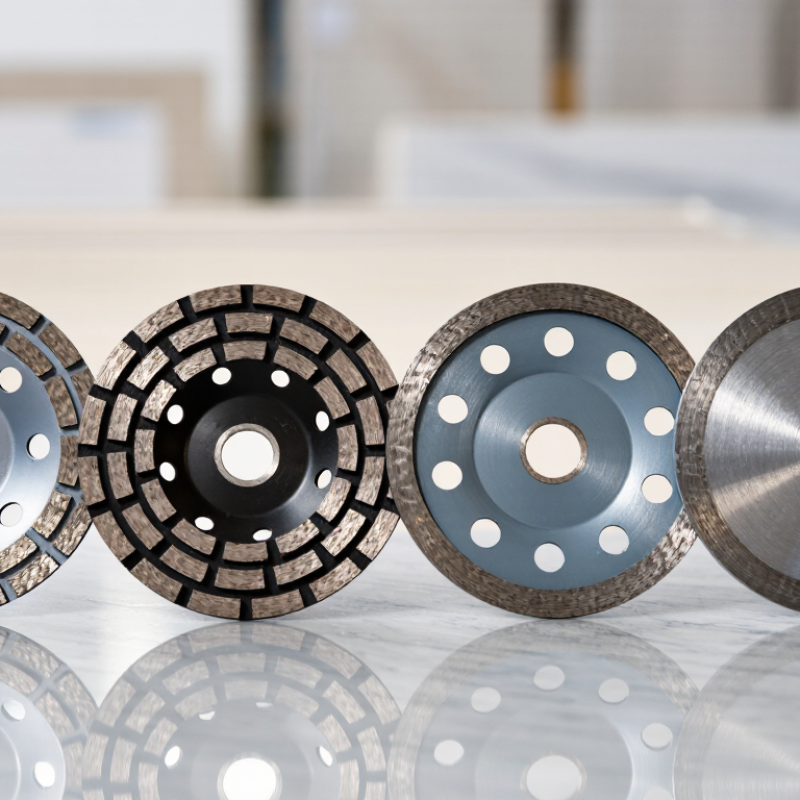
Marble cutting discs usually fall into three types: continuous-rim, turbo-rim, and segmented designs. Continuous rims produce the cleanest edges on polished marble. Turbo rims cut faster but may leave more edge texture. Segmented discs offer strong debris clearance, although they can chip delicate slabs. The correct choice depends on marble hardness, thickness, finish, and machine speed.

Diamond grit controls cutting efficiency. Coarse grit removes material quickly, while finer grit supports smoother edges. A softer metal bond can expose fresh diamonds sooner on hard marble. A harder bond may last longer on softer stone. According to Grand View Research’s 2024 diamond tools market report, the global market reached about USD 9 billion in 2023, with construction as a major application. This demand reflects performance pressure, not just volume.

Cooling matters greatly. Wet cutting reduces heat, airborne dust, and discoloration risks. It also helps maintain a stable kerf during long cuts. Always compare the disc’s maximum RPM with the saw’s operating speed.

EN 13236 safety requirements also emphasize correct mounting and operating conditions. In field testing, a disc that looks ideal on paper can still disappoint. I would check the first cut for vibration, edge chipping, and unusual heat. Small defects often reveal a poor match faster than a specification sheet.

Diamond Rim Designs for Different Marble Cutting Applications

2026 Top Marble Cutting Disc Types for Global Buyers

Diamond Rim Designs for Different Marble Cutting Applications

Marble cutting demands a rim design that matches the stone, machine, and finish requirement. Continuous-rim diamond discs create the cleanest edge on polished marble. Their uninterrupted cutting surface reduces chipping around thin tiles and decorative panels. Use water cooling to control heat and preserve the blade’s cutting efficiency.

Segmented rims remove material faster on thick slabs, stair parts, and rough construction pieces. The gaps improve cooling and help clear marble dust from the cutting zone. However, segmented designs can leave a rougher edge. A skilled operator may need a finishing pass. That extra step is often overlooked.

Turbo rims offer a practical balance between speed and edge quality. Their wave-shaped segments support smoother cutting than standard segmented rims. They work well for medium-thickness marble and small fabrication workshops. Electroplated diamond rims can suit detailed shaping and occasional repair work. Their exposed diamond particles cut aggressively, but the working layer wears sooner.

Buyers should check diamond concentration, bond hardness, rim height, arbor size, and maximum speed. Softer marble may respond better to a sharper, freer-cutting bond. Harder or engineered marble can require stronger support and steadier feed pressure. I have found that low water flow causes more problems than many buyers expect. Still, no rim design performs perfectly on every marble variety. Sample cutting remains the most reliable purchasing test.

Choosing the Right Disc Diameter, Thickness, and Bore Size

2026 Top Marble Cutting Disc Types for Global Buyers

Choosing the right disc diameter, thickness, and bore size strongly affects marble cutting quality. A larger diameter provides greater cutting depth, but it must match the saw’s guard and rated speed. A 115 mm disc suits many compact grinders, while larger tools may accept 230 mm or more. Never exceed the machine’s maximum diameter or RPM.

Thickness changes the cutting feel. Thin continuous-rim diamond discs usually create narrow cuts and reduce material waste. They can produce clean edges on marble, but excessive pressure may bend or damage them. Thicker discs offer better stability during long cuts. However, they remove more material and may increase heat. I have found that a medium thickness often gives a practical balance for site work.

The bore size must fit the spindle precisely. A loose fit can cause vibration, uneven wear, and chipped marble. Check the arbor diameter before ordering. Use only an approved reducer ring, when the tool maker allows one. It should sit flat, without forcing the disc. Continuous rims are commonly chosen for smooth marble edges, while turbo rims may cut faster but sometimes leave more chips. Make a short test cut first. A perfect specification on paper can still fail with a worn flange, poor cooling, or rushed handling. Recheck the disc after several cuts, especially when the marble shows dust buildup or heat marks.

2026 Top Marble Cutting Disc Types for Global Buyers

Choosing the Right Disc Diameter, Thickness, and Bore Size

Smaller 115–125 mm discs are commonly used with handheld grinders for trimming and edge work, while 180–230 mm discs provide greater cutting depth for larger portable tools. Disc thickness generally increases with diameter, and larger blades often use 30–50.8 mm bore sizes. Always match the bore size, maximum RPM, and disc diameter with the machine specification.

Typical metric configurations for marble cutting applications; actual specifications may vary by tool and cutting system.

Wet Cutting and Dry Cutting Methods for Marble

2026 Top Marble Cutting Disc Types for Global Buyers

Wet cutting remains the safer choice for continuous marble work. Water cools the rim, suppresses dust, and helps prevent edge chipping. The U.S. Occupational Safety and Health Administration limits respirable crystalline silica exposure to 50 micrograms per cubic meter over eight hours. This makes water-fed cutting a practical control, not merely a finishing preference. Continuous-rim and turbo-rim diamond discs usually deliver clean cuts on polished slabs. Use steady feed pressure, adequate water flow, and a rigid machine. Keep it cool.

Dry cutting suits small installations, repairs, and locations without reliable water access. Turbo and segmented discs can cut faster, but they generate more airborne dust and heat. Short passes are safer for the disc and marble. Allow cooling pauses. Not always. A disc rated for marble should still be tested on an offcut, because resin content, thickness, and vein structure vary.

The U.S. Geological Survey’s 2025 Mineral Commodity Summaries places domestic dimension-stone output in the million-ton range, showing the scale of professional stone processing. Buyers should compare cutting speed, kerf width, arbor size, and expected service life, rather than choosing by price alone. For wet production lines, prioritize stable segments and consistent diamond exposure. For dry field work, prioritize heat resistance and dust-control compatibility. A lower-cost disc may look efficient initially, yet frequent chipping can erase that saving. That is the point worth reconsidering.

2026 Top Marble Cutting Disc Types for Global Buyers - Wet Cutting and Dry Cutting Methods for Marble
Disc Type Primary Cutting Method Typical Diameter Range Common Arbor Sizes Recommended Marble Applications Typical Grit or Segment Configuration Key Advantages Main Limitations Buyer Selection Considerations
Continuous-Rim Diamond Blade Wet Cutting 105–400 mm 22.23 mm, 25.4 mm, 30 mm Marble tiles, slabs, vanity tops, thin panels and precision edge work Continuous diamond rim; fine to medium diamond grade Very smooth cuts, reduced edge chipping and good control on polished marble Water is required; cutting speed is usually lower than turbo-rim designs Choose a stable core, suitable rim height and a diameter compatible with the saw guard
Turbo-Rim Diamond Blade Wet or Dry 105–230 mm 22.23 mm, 25.4 mm General-purpose marble cutting, renovation work and curved or irregular cuts Continuous serrated rim; medium diamond grade Faster material removal than a standard continuous rim with relatively clean results Dry use can create dust and may produce more edge chipping than wet cutting Use wet cutting for visible finished edges and dry cutting only with effective dust control
Segmented Diamond Blade Wet Cutting 250–1,200 mm 25.4 mm, 30 mm, 50.8 mm Large slabs, bridge saws, block trimming and high-volume fabrication Separated diamond segments; medium or coarse diamond grade Efficient cooling, high cutting capacity and strong performance on thick marble Usually leaves a rougher edge and is less suitable for final decorative cuts Check segment height, segment spacing, core rigidity and the machine’s maximum RPM
Electroplated Diamond Blade Dry Cutting 100–230 mm 22.23 mm, 25.4 mm Small repairs, detail cutting, difficult-to-reach areas and occasional fabrication Single-layer diamond coating on the rim or edge Fast initial cutting and an aggressive cutting feel on soft to medium marble Diamond exposure decreases as the coating wears; service life is often shorter Best for controlled intermittent work rather than continuous high-volume production
Vacuum-Brazed Diamond Blade Dry Cutting 100–230 mm 22.23 mm, 25.4 mm Portable grinders, dry shaping, installation adjustments and onsite marble work Exposed diamond particles bonded by brazing; open cutting edge Good self-cleaning action, high cutting aggressiveness and convenient portable use Heat buildup may reduce service life; edge finish is generally less refined than wet cutting Use light passes, avoid forcing the blade and provide local dust extraction
Thin-Rim Precision Blade Wet Cutting 105–350 mm 22.23 mm, 25.4 mm, 30 mm Thin marble tiles, mosaics, narrow strips and low-waste precision work Thin continuous rim; fine diamond grade Low kerf loss, accurate sizing and reduced material waste More vulnerable to side pressure, bending and overheating Use on a rigid, well-aligned machine with adequate water flow and steady feed pressure
Silent-Core Diamond Blade Wet Cutting 250–800 mm 25.4 mm, 30 mm, 50.8 mm Professional bridge-saw work where operator comfort and lower noise are important Continuous or segmented rim with a noise-reducing laminated core Lower operating noise and reduced vibration compared with a conventional steel core Higher purchase cost and stricter requirements for correct mounting Consider workplace noise limits, machine compatibility and the required finish quality
Tuck-Pointing or Joint-Cutting Diamond Blade Dry Cutting 100–125 mm 22.23 mm Removing mortar joints, opening narrow channels and localized restoration work Narrow segmented or turbo rim; medium to coarse diamond grade Creates narrow grooves and works effectively with handheld angle grinders Not intended for broad slab cuts or highly polished finished edges Match the blade thickness to the required joint width and use suitable respiratory protection
Core-Drill Diamond Crown Wet Cutting 20–300 mm typical drilling diameter Machine-specific threaded or mounted connection Round openings for plumbing, drainage, faucets and electrical installations in marble Segmented or continuous diamond crown Produces accurate circular holes with controlled breakout when properly guided Requires a compatible drilling system, water supply and stable positioning Verify drilling diameter, connection type, working depth and the marble thickness
Technical note: Actual cutting speed, service life and edge quality depend on marble hardness, thickness, blade specification, machine power, feed pressure, RPM, water flow and operator technique. Always follow the disc manufacturer’s maximum-RPM marking and the applicable safety requirements for diamond cutting tools.

Safety Standards, Maintenance, and Global Buyer Considerations

Global buyers choosing marble cutting discs should treat safety compliance as a purchasing requirement, not a product detail. The correct disc must match marble hardness, machine speed, cutting method, and intended edge quality. Before production, check the rated maximum RPM against the saw’s actual speed. A guard, stable workpiece, and suitable eye, hearing, and respiratory protection remain essential. Wet cutting needs controlled water flow, while dry cutting demands dust management and regular pauses. Check twice.

Maintenance begins with a clean inspection after every shift. Look for missing segments, uneven wear, cracks, overheating marks, or a distorted core. Store discs vertically in a dry area, away from impact and chemical contamination. Do not force a dull disc; excessive pressure can damage both the tool and the stone. A brief dressing operation may restore cutting performance, but it cannot repair structural damage. Operators sometimes continue using a disc too long. I have seen schedule pressure encourage this poor decision.

For international purchasing, request clear specifications, test records, safety instructions, and traceable batch information. Confirm thread or bore size, segment dimensions, packaging strength, and storage conditions before shipment. Requirements differ by destination, so buyers should verify applicable standards with qualified local professionals. Samples and controlled trials reveal performance differences that catalogs often hide. A lower price can become expensive when cutting speed, safety, or consistency is sacrificed. No universal fit.

Product Added

Go to Quote Request Form

Continue Product Search