2026 Top UP-1001 DIN Abrasion Tester Price Guide?
The 2026 price of a UP-1001 DIN Abrasion Tester deserves careful examination, not a simple supplier comparison. Buyers should assess test-wheel quality, load accuracy, drum speed, calibration records, and after-sales support. A low quotation may hide expensive replacement parts or weak documentation.
ISO 4649 and DIN 53516 remain important references for evaluating rubber abrasion behavior. These standards require controlled loads, defined sliding distances, and carefully prepared specimens. The International Organization for Standardization continues to treat abrasion testing as a precision process, not a visual ranking exercise. Smithers’ rubber industry outlook also identifies durability and performance testing as important factors in material development. Grand View Research reports continued growth in rubber and polymer applications, especially automotive, industrial, and footwear sectors. That growth increases demand for repeatable laboratory equipment.
John S. Dick, a recognized rubber technology author, wrote, “Testing is only as reliable as the discipline behind it.” That principle applies directly to the UP-1001 DIN Abrasion Tester. The machine may look straightforward, yet a worn abrasive sheet, uneven specimen, or incorrect load can distort results within minutes. Small details matter.
This guide compares expected 2026 pricing, configuration differences, and ownership costs. Public listings are inconsistent. Some omit calibration services entirely. That is a weakness. Buyers should request a formal quotation, certification scope, warranty terms, and delivery conditions before judging value. Prices can also change with regional taxes, automation options, and laboratory accreditation requirements. A precise number is useful, but it is never the whole decision.
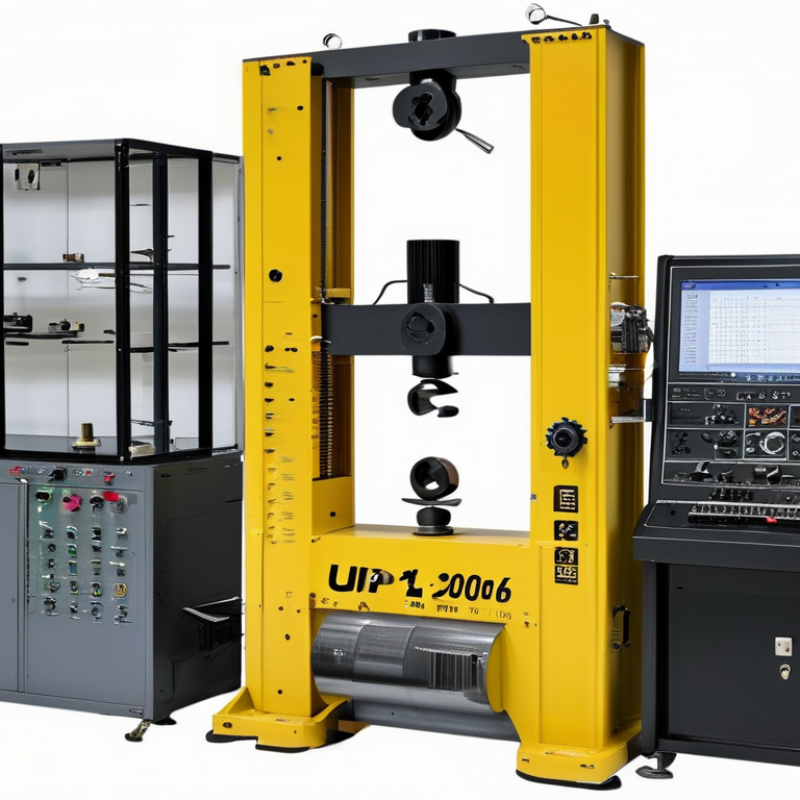
UP-1001 DIN Abrasion Tester: DIN 53516 and ISO 4649 Applications
The UP-1001 DIN Abrasion Tester supports rubber testing under DIN 53516 and ISO 4649 applications. These methods measure volume loss after a rotating abrasive drum contacts a prepared specimen. Lower loss usually indicates better abrasion resistance, but results depend on compound design and test preparation.
ISO 4649 reports abrasion as volume loss in cubic millimetres. Its procedure uses a defined abrasive sheet, load, sliding distance, and test speed. DIN 53516 remains widely referenced in older technical files, although laboratories should confirm current customer requirements. The International Organization for Standardization identifies ISO 4649 as a comparative method, not a complete prediction of field wear (ISO 4649:2017).
The numbers matter.
A 2024 report from the International Rubber Study Group estimated global rubber demand at roughly 31 million tonnes, showing the scale of performance testing across tires, seals, footwear, and industrial parts (IRSG, World Rubber Industry Outlook, 2024). Another industry review by Smithers projects continued growth in specialty rubber consumption through 2028, driven by mobility and infrastructure applications (Smithers, The Future of Rubber, 2024). That supports careful equipment budgeting in 2026, but price alone is a weak guide. Load stability, drum alignment, calibration records, dust extraction, and replacement abrasives can change the real ownership cost. A cheaper unit may become expensive after repeated deviations. The method looks simple. It is not. Operators should verify specimen dimensions, conditioning temperature, balance resolution, and reporting software before comparing quotations. Small procedural errors can move the result significantly. That assumption deserves checking.
How the UP-1001 Test Works: 40 m Abrasive Travel and 10 N Load
The UP-1001 DIN abrasion test measures how much material a rubber specimen loses under controlled wear. Its core setting is simple: a 10 N load presses the specimen against abrasive cloth while the drum travels 40 m. ISO 4649:2017 uses this type of drum abrasion method and reports results as relative volume loss or abrasion resistance.
That distance is not a minor detail. At a steady drum speed, the specimen experiences repeated contact, sliding, and heat generation. A technician should record specimen thickness, conditioning time, abrasive grade, and room temperature. ISO 4649:2017 recommends controlled conditioning because moisture and temperature can change elastomer behavior. Small errors grow.
DIN 53516 data practice also shows why sample preparation deserves attention. A tilted specimen can wear unevenly, while excessive pressure may create abnormal heat marks. The method is useful, but it is not flawless. Laboratory comparison reports often identify abrasive-sheet variation and operator handling as major repeatability concerns. Price comparisons for a 2026 UP-1001 purchase should therefore include calibration records, load verification, drum-speed control, and software traceability. A low quotation may hide weak measurement control. Before testing, confirm that the 10 N load is verified and that the full 40 m travel is recorded in the test file.
2026 UP-1001 Price Factors: Controls, Drum Design, and Calibration
A 2026 UP-1001 price guide should examine more than the purchase quote. Controls often create the first major price difference. A basic panel may set load, speed, and test cycles manually. Advanced controls can store methods, record results, and export data. These features reduce transcription errors during repeated testing. Still, a bright touchscreen does not prove accuracy. I would ask for control resolution, software records, and operator training before paying more.
Drum design also affects both cost and test consistency. Check the drum diameter, rotational speed stability, surface alignment, and abrasive sheet replacement process. A rigid drum with even contact helps prevent unusual wear patterns. Small alignment errors can become visible as uneven rubber tracks. That detail matters. Some lower-priced units look practical, but replacing abrasive materials may be slow or difficult. The real operating cost can exceed the initial saving.
Calibration deserves careful attention. Reliable suppliers should explain how load, speed, drum dimensions, and revolution counting are verified. Ask whether calibration documents are traceable to recognized measurement standards. A certificate alone is not enough if service intervals remain unclear. For a laboratory running daily tests, scheduled verification and accessible spare parts may justify a higher price. My own caution is simple: published specifications can hide practical limitations. Request a demonstration using your sample type, then compare repeatability, setup time, and maintenance needs.
Comparing Costs Under DIN 53516, ISO 4649, and ASTM D5963
2026 Top UP-1001 DIN Abrasion Tester Price Guide
When comparing a UP-1001 DIN Abrasion Tester, test standards matter more than the nameplate price. DIN 53516 focuses on volume loss from a rotating abrasive drum. ISO 4649 uses a closely related method but may require different reporting details and reference materials. ASTM D5963 evaluates rubber treadwear resistance under a rotating drum procedure. These differences can affect fixtures, calibration, and software requirements.
A basic configuration may appear affordable, but the final quotation often includes abrasive sheets, reference compounds, cutting tools, dust collection, and installation. Ask whether the package supports the required standard directly. A laboratory running DIN 53516 and ISO 4649 may need interchangeable holders or controlled test settings. ASTM D5963 work can add specialized sample preparation and reporting requirements. Small accessories matter.
Check calibration certificates, drum speed accuracy, applied load, and service response time. Request sample test records before purchase. A reliable supplier should explain uncertainty, maintenance intervals, and replacement-part availability. Do not compare two prices until their accessories match. The comparison is not perfect. Shipping, local taxes, training, and annual verification can change the ownership cost substantially. In practical budgeting, a slightly higher initial quote may reduce downtime. Still, buyers should challenge vague “multi-standard” claims. Ask for clause-by-clause compliance evidence and a written list of exclusions.
Ownership Costs: Abrasive Sheets, Reference Compounds, and Service
The 2026 price of a UP-1001 DIN Abrasion Tester is only part of the ownership decision. Consumables can quietly shape the annual budget. Abrasive sheets need consistent grit, thickness, and surface condition. A worn sheet may increase friction and distort mass-loss results. Store unused sheets flat, dry, and sealed.
Reference compounds also require careful control. Each batch should have clear identification, storage records, and an approved test range. Operators should compare routine results with historical values, not rely on one reading. A small laboratory may use fewer compounds, but expired or contaminated material can create expensive retesting. That cost is easy to miss.
Service planning protects measurement reliability. Include calibration checks, wheel inspection, shaft cleaning, and replacement of worn fixtures. Keep a service log with dates, findings, and corrective actions. A practical estimate should separate planned service from unexpected downtime. I have seen budgets fail because they counted labor but ignored shipping and technician travel. That assumption deserves review. The cheapest quote may not provide the lowest cost per valid test. Ask for spare-part lead times, calibration evidence, training options, and support response times. Also record operator time. It often becomes the largest hidden expense.
