China Top 10 Formaldehyde Project Manufacturers?

Choosing China’s top formaldehyde project manufacturers requires more than comparing factory size or advertised capacity. A credible assessment should examine engineering experience, process safety, emissions control, equipment reliability, commissioning support, and long-term maintenance. These factors shape whether a plant performs steadily after the opening ceremony.

The market remains strategically important. Reports from Grand View Research and Mordor Intelligence indicate continued global demand for formaldehyde, driven by resins, wood panels, coatings, insulation, and specialty chemicals. Their forecasts differ in market boundaries and base years. That difference matters. Market numbers should guide research, not replace technical verification.

Safety must remain central. The World Health Organization recommends a 30-minute indoor formaldehyde guideline of 0.1 mg/m³. The International Agency for Research on Cancer classifies formaldehyde as carcinogenic to humans. Dr. Kurt Straif, former head of IARC’s Monographs programme, stated, “Formaldehyde is carcinogenic to humans.” This warning makes emission control, worker protection, leak detection, and waste management essential parts of every Form­aldehyde Project.

A strong manufacturer should demonstrate documented projects, process guarantees, automation capability, and compliance with applicable national standards. Site visits can reveal details that brochures hide, including pipe routing, maintenance access, instrument quality, and housekeeping. References from operating clients are even more valuable.

There is no perfect ranking. A supplier may excel in reactor design but provide weaker after-sales service. Another may offer competitive pricing but limited international experience. Therefore, this guide compares China’s leading formaldehyde project manufacturers through a practical, evidence-based lens. Some conclusions may change as technologies, regulations, and verified project data develop. That uncertainty deserves honesty.
China Top 10 Formaldehyde Project Manufacturers?

Industry Scope: What Formaldehyde Project Manufacturers Deliver in China

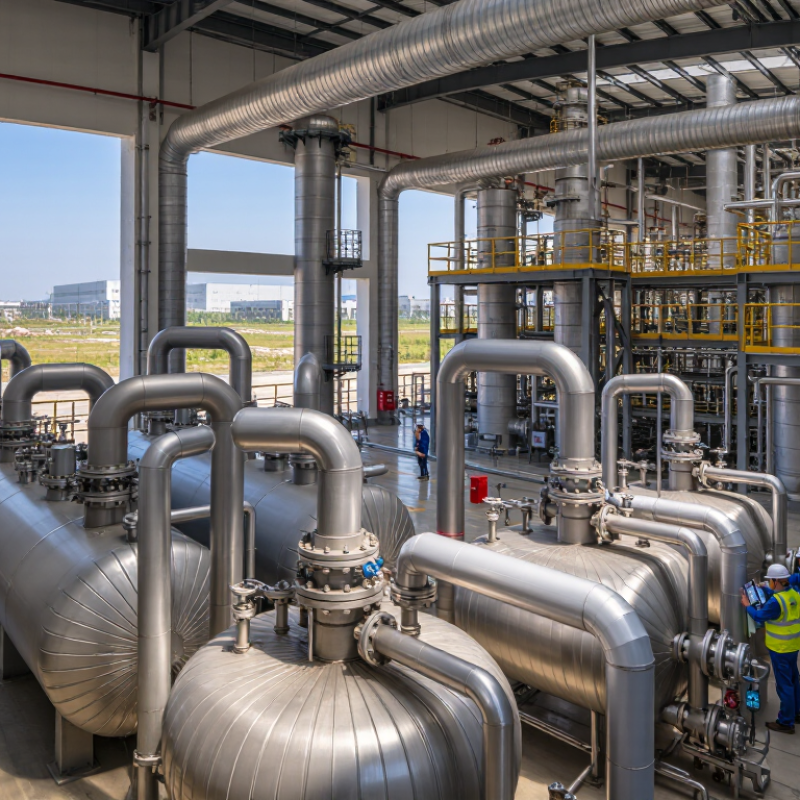
China’s formaldehyde project manufacturers serve a wider scope than equipment supply. Their work often begins with feedstock evaluation, site planning, and process selection. A complete project may include methanol vaporization, catalytic oxidation, absorption towers, storage tanks, dosing systems, and automatic control. Safety design is essential. Engineers must manage heat release, corrosion, emissions, and worker exposure.

Grand View Research estimated the global formaldehyde market at about USD 5.8 billion in 2023, with Asia-Pacific holding the leading share. The China Petroleum and Chemical Industry Federation reported approximately 15.95 trillion yuan in petrochemical industry revenue during 2023. These figures show strong industrial capacity, but they do not prove every project is efficient. Market size can hide weak maintenance and uneven engineering quality.

Experienced manufacturers also deliver feasibility studies, energy assessments, environmental-control systems, commissioning, operator training, and spare-parts planning. They should provide mass balances, heat balances, equipment lists, emission calculations, and acceptance records. Chinese projects commonly reference GB 31571-2015 for pollutant emission control and GB 18597-2023 for hazardous-waste storage requirements. The boundary is not always clean. Some suppliers design the plant but exclude utilities, civil works, or long-term support. Buyers should examine those gaps before comparing quotations. That detail is often overlooked.

China Formaldehyde Project Manufacturers: Industry Delivery Scope

Formaldehyde project manufacturers in China typically deliver engineering solutions for indoor-air compliance, including testing, source control, ventilation, adsorption, purification equipment, commissioning, and post-treatment verification. The chart compares regulatory formaldehyde concentration limits that these project solutions commonly target.

Reference values: GB/T 18883-2022 Indoor Air Quality Standard and GB 50325-2020 Standard for Indoor Environmental Pollution Control of Civil Building Engineering. Lower values indicate stricter control requirements.

Ranking Method: Capacity, Certifications, Projects, and the 0.08 mg/m³ Limit

A credible China top 10 ranking for formaldehyde project manufacturers should begin with measurable capacity. Production volume matters, but it cannot prove field performance. We would review annual output, equipment scale, engineering staff, and delivery records. Factory visits can reveal details that brochures often omit.

Certifications must be checked carefully. Their scope, issuing body, and expiry date deserve attention. A certificate for materials does not automatically validate a complete treatment project. Strong candidates should provide third-party test reports, commissioning records, and traceable monitoring data. Projects also carry weight. Hospitals, schools, offices, and large residential developments show whether a manufacturer can manage different ventilation conditions and occupancy patterns.

The 0.08 mg/m³ limit should remain a central screening reference. Testing should use calibrated instruments, documented sampling points, and stable indoor conditions. Results need comparison before and after treatment. One low reading is not enough. Seasonal changes can alter indoor concentrations, too. Capacity may receive 25 percent of the score, certifications 20 percent, completed projects 30 percent, and verified results against 0.08 mg/m³ 25 percent. This structure is practical, though not perfect. Project complexity and after-sales response are difficult to score fairly. A careful ranking should disclose its evidence, update old data, and separate verified facts from manufacturer claims.

China’s Top 10 Manufacturers by Technology, Scale, and Project Experience

China Top 10 Formaldehyde Project Manufacturers?

China’s top ten formaldehyde project manufacturers should be assessed by technology, scale, and project experience. The largest factory is not always the best choice. Strong manufacturers usually provide complete engineering support, from process design to commissioning. Their systems may include methanol oxidation, absorption units, heat recovery, and tail-gas control. Stable temperature management matters. So does corrosion-resistant equipment.

Technology depth becomes visible during difficult operating conditions. Experienced teams study raw material quality, local climate, utility limits, and plant layout before proposing equipment. They also use process simulation, automatic control, and safety interlocks. Detailed drawings, material certificates, and factory testing improve project reliability. These documents should be available before installation begins. Clear records build trust.

Scale offers another useful measure. Leading manufacturers often operate large fabrication facilities and maintain dedicated engineering teams. They can coordinate vessels, piping, electrical systems, and instrumentation under one schedule. Yet project references deserve closer inspection. A supplier may list many contracts but provide little evidence of actual operating results. Ask for comparable capacity, commissioning dates, energy data, and maintenance feedback. Site visits can reveal workmanship that brochures hide.

Some projects still experience delays, even with capable suppliers. Design changes, transport issues, or incomplete customer data can create pressure. This is where communication matters most. A realistic manufacturer documents risks early and accepts technical questions. That behavior may be less impressive than a bold sales promise, but it is usually more dependable.

China Top 10 Formaldehyde Project Manufacturers — Comparative Assessment by Technology, Scale, and Project Experience
Rank Anonymous Manufacturer Profile Primary Formaldehyde Technologies Typical Single-Line Capacity Project Delivery Scope Engineering and Commissioning Capability Typical Project Complexity Environmental and Safety Focus International Project Readiness Overall Assessment
1 Manufacturer 01 Silver-catalyst oxidation Process-gas recovery 30,000–300,000 tonnes/year Process design, equipment fabrication, automation integration, EPC support Front-end engineering, detailed design, start-up assistance, operator training Large integrated chemical parks and multi-line formaldehyde units Tail-gas treatment, emission monitoring, explosion protection, closed-loop methanol handling Suitable for overseas tenders; multilingual technical documentation available Very strong
2 Manufacturer 02 Silver-catalyst process Heat recovery 20,000–250,000 tonnes/year Complete production-line packages, reactors, absorbers, storage and utilities Basic engineering, fabrication supervision, commissioning and performance testing Medium-to-large plants serving resin, board and chemical-materials producers Low-emission absorber design, condensate management, fire and gas detection interfaces Good export readiness with project-based support Very strong
3 Manufacturer 03 Iron-molybdenum oxidation High-conversion gas treatment 20,000–200,000 tonnes/year Process package, core equipment, control system integration and site services Process simulation, equipment sizing, installation guidance and commissioning Continuous-production plants requiring high availability and stable operation Selective oxidation control, catalytic exhaust treatment and online process monitoring Suitable for technically demanding international projects Very strong
4 Manufacturer 04 Silver-catalyst oxidation Methanol vaporization 15,000–180,000 tonnes/year Turnkey line design, reactor systems, absorption towers and auxiliary equipment Detailed engineering, installation supervision, commissioning and maintenance training New-build and expansion projects with moderate-to-high automation requirements VOC reduction, safe methanol storage, pressure relief and emergency shutdown design Export capable when local engineering partners are engaged Strong
5 Manufacturer 05 Silver-catalyst process Energy integration 10,000–150,000 tonnes/year Core process equipment, piping packages, electrical and instrumentation coordination Basic design, fabrication quality control, field assistance and start-up services Small and medium plants, debottlenecking and capacity-expansion projects Absorption efficiency, heat recovery, wastewater minimization and operator safety Suitable for regional export projects Strong
6 Manufacturer 06 Iron-molybdenum process Process control integration 10,000–120,000 tonnes/year Process design, oxidation reactors, absorption systems and control-panel integration Process calculations, equipment inspection, installation support and operator training Plants prioritizing stable product concentration and continuous operation Gas-leak detection, automatic shutdown, emission control and hazardous-area design support Moderate-to-good international readiness Strong
7 Manufacturer 07 Silver-catalyst oxidation Absorption-system optimization 8,000–100,000 tonnes/year Modular process equipment, absorption towers, tanks, pumps and utility skids Equipment engineering, factory acceptance testing and commissioning assistance Compact plants, replacement projects and phased capacity upgrades Improved absorber performance, corrosion control and formaldehyde exposure reduction Suitable for standard international equipment packages Strong
8 Manufacturer 08 Silver-catalyst process Waste-heat recovery 8,000–80,000 tonnes/year Core equipment supply, piping prefabrication and engineering documentation Equipment layout, construction support, commissioning and troubleshooting Small-to-medium formaldehyde plants and downstream resin integration Energy-efficiency improvement, tail-gas treatment and safe chemical storage Export possible with customer-appointed local installation teams Competitive
9 Manufacturer 09 Silver-catalyst oxidation Skid-mounted systems 5,000–60,000 tonnes/year Standardized production modules, absorbers, storage systems and utility connections Shop engineering, pre-assembly, factory testing and remote commissioning support Fast-track projects, replacement lines and limited-site-footprint installations Interlocked process control, emergency ventilation and modular safety systems Best suited to standardized overseas packages Competitive
10 Manufacturer 10 Silver-catalyst oxidation Customized process equipment 5,000–50,000 tonnes/year Reactors, absorbers, tanks, heat exchangers and selected automation packages Equipment design, fabrication inspection, installation guidance and start-up support Customized small-scale plants and modernization of existing facilities Material selection, corrosion protection, emission reduction and operator safety Moderate international readiness; local partner support recommended Competitive

Note: Manufacturer identities are intentionally anonymized. Capacity bands and capability descriptions represent commonly published ranges and standard project-service categories for Chinese formaldehyde-plant equipment suppliers; final selection should be verified through current technical proposals, references, certifications, performance guarantees and site-specific feasibility studies.

Treatment Technologies: Adsorption, Photocatalysis, and Ventilation Performance

China Top 10 Formaldehyde Project Manufacturers: Treatment Technologies and Ventilation Performance

Selecting a formaldehyde project manufacturer requires more than accepting a “top ten” ranking. Experienced engineering teams inspect emission sources, room volume, occupancy, and ventilation before proposing equipment. Adsorption systems use porous media to capture formaldehyde, but their performance declines when the media becomes saturated. A project should record replacement intervals, airflow rates, temperature, and humidity. A high removal percentage means little without these test conditions.

Photocatalysis can help break down pollutants when suitable light reaches an active catalyst surface. However, shaded furniture, dust, and weak airflow may reduce practical performance. Ventilation remains essential because it dilutes emissions and removes accumulated indoor air. Engineers should verify fresh-air volume, pressure balance, duct cleanliness, and noise levels after installation. On-site measurements before and after treatment provide stronger evidence than laboratory claims alone. A polished report can still miss hidden sources behind cabinets or flooring.

Tips: Request independent testing with clear sampling methods. Check breakthrough data for adsorption media. Compare formaldehyde concentration, air changes per hour, and energy use. Keep doors and windows operating as they will during normal occupancy. Do not rely on odor, because low odor does not prove safe air. In my experience, ventilation plans often look adequate on paper but perform poorly after construction changes. Rechecking several rooms is wise. Small airflow losses matter.

Buyer Checklist: Testing Standards, Warranty Terms, and Verified Case Data

China Top 10 Formaldehyde Project Manufacturers?

A serious buyer should request test reports before comparing prices. Ask whether testing followed ISO 16000-3, EN 717-1, or another relevant method. The report should identify chamber size, temperature, humidity, sampling time, and detection equipment. Independent laboratories accredited to ISO/IEC 17025 provide stronger evidence. A product brochure is not enough.

Warranty language deserves close attention. Check coverage length, replacement terms, installation responsibilities, and excluded operating conditions. Confirm whether the warranty covers formaldehyde concentration results, equipment defects, or only spare parts. Require written performance limits for airflow, room volume, and maintenance intervals. Small details matter. Some warranties appear generous but exclude ordinary site conditions.

Verified case data should include project location, building type, treatment area, baseline readings, final readings, and monitoring duration. Request signed acceptance records, not edited screenshots. Visit a completed site when possible. Speak with the facility operator, not only the sales contact. In practice, cleanroom and residential results can differ sharply. I have seen impressive laboratory figures weaken after poor sealing and irregular ventilation. That is an uncomfortable reminder: equipment quality cannot repair weak project management. Buyers should also compare repeated measurements, because one low reading may be accidental. Ask for the sampling plan and laboratory chain of custody. Reliable manufacturers answer these questions clearly, even when the data is less flattering.

Product Added

Go to Quote Request Form

Continue Product Search