China Top Fanuc Encoder Suppliers for CNC Machines?

Selecting reliable China-based Fanuc Encoder suppliers for CNC machines requires more than comparing online prices. A suitable supplier should understand Fanuc servo systems, encoder feedback signals, mounting dimensions, connector types, and machine-specific compatibility. These details affect positioning accuracy, spindle stability, and unexpected downtime on the factory floor.

This guide examines suppliers through practical purchasing criteria. It considers product range, technical documentation, inspection procedures, replacement support, and export experience. Experienced vendors should provide clear model references, wiring information, resolution data, and photographs of actual inventory. Some may also offer testing records, sample orders, and warranty terms. Those details matter when a small encoder controls a high-value machining center.

Price still matters. It should not lead the decision.

Supplier evaluation also requires careful verification. A polished website cannot prove genuine inventory or consistent quality. Buyers may need to request serial-number photos, test videos, packaging details, and references from comparable CNC users. Independent inspection can add time and cost, but it may prevent a much larger production loss. Even experienced purchasers can miss connector variations or outdated model numbers. That weakness deserves attention. This article compares leading China Fanuc Encoder suppliers with a balanced view, recognizing both their technical strengths and possible limitations. The goal is practical sourcing guidance, not an unverified ranking. It supports safer decisions based on evidence, machine compatibility, service responsiveness, and long-term reliability.
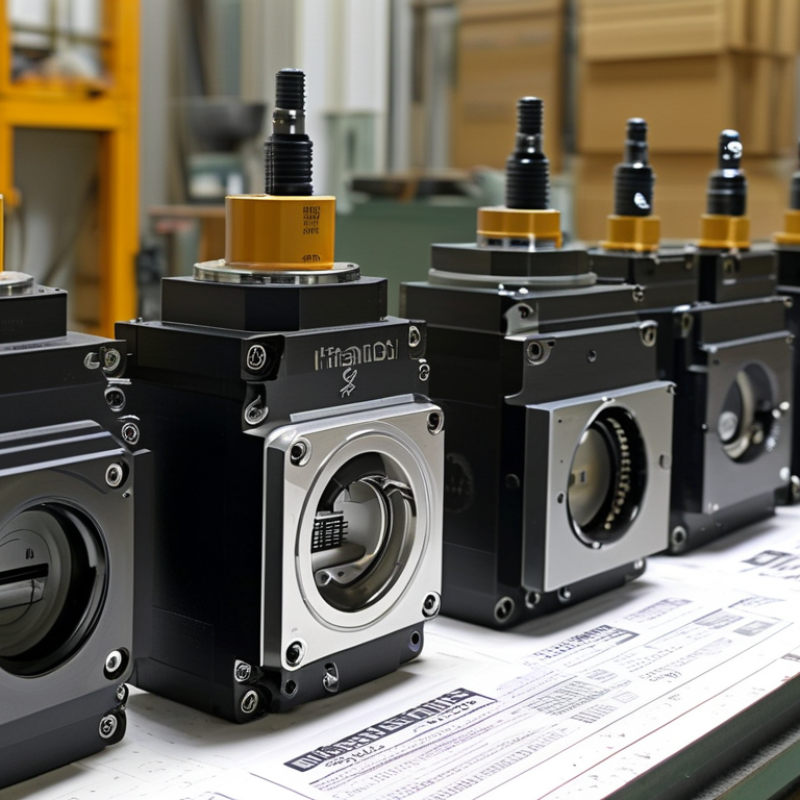
China Top Fanuc Encoder Suppliers for CNC Machines?

Fanuc Encoder Basics and Their Role in CNC Machines

A CNC encoder converts shaft movement into position feedback for the motion controller. It helps the servo motor know where the cutting axis is. Without accurate feedback, the machine may produce uneven surfaces, incorrect holes, or sudden positioning errors.

Most encoder systems use rotary sensing. Incremental models report movement through pulses, while absolute models retain a position value after power loss. Resolution matters, but it is not the only concern. Accuracy, signal quality, response time, mounting tolerance, and electrical compatibility also affect performance. A 20-bit device can still perform poorly if vibration enters the coupling. That detail is often underestimated.

The International Federation of Robotics reported 541,302 industrial robot installations in 2023, with more than 4.28 million robots operating worldwide. This expansion increases demand for dependable motion-feedback components across automated production. CNC service experience shows that heat, oil mist, cable bending, and poor grounding frequently damage encoder signals. Suppliers should provide test records, wiring diagrams, environmental ratings, and traceable quality data. A useful encoder should match the drive protocol, shaft dimensions, and machine accuracy requirements. Specifications can look perfect on paper. Real installations may disagree. Periodic signal checks and alignment inspections remain necessary, especially on high-speed axes.

CNC Encoder Basics: Position Resolution Classes

In CNC machines, an encoder provides position feedback to the servo drive and controller. The values below show the exact number of discrete position steps available per revolution for common binary resolution classes, calculated as 2n. Higher resolution enables finer position measurement, although system accuracy also depends on mechanical rigidity, calibration, signal quality, and control-loop performance.

Key Factors for Choosing Chinese Fanuc Encoder Suppliers

Choosing a Chinese Encoder Supplier for CNC Machines

Choosing a Chinese encoder supplier requires more than comparing unit prices. CNC feedback devices must match shaft size, resolution, signal format, connector, and mounting space. In daily maintenance, a mismatched connector can stop a production cell within minutes. Start with drawings, interface tables, and a tested sample. Ask for measured accuracy, repeatability, temperature range, and vibration results. Short documents are useful. Missing data is not.

The International Federation of Robotics reported 276,288 industrial robots installed in China during 2023. This volume indicates a deep local automation supply base, but scale alone does not prove encoder quality. Evaluate calibration methods, component traceability, incoming inspection, and final test records. ISO’s 2023 Survey recorded 1,265,216 ISO 9001 certificates worldwide. Certification supports process control; it does not replace your own sample testing. Request serial-number traceability and a clear failure-analysis procedure. Then test several units under heat, dust, and continuous rotation.

Experienced buyers also check engineering response time. Can the supplier explain phase error, alarm outputs, and cable shielding without vague claims? Ask for a two-year failure history, not only a glossy catalog. Confirm spare availability, inspection photos, packaging, and written warranty terms. A factory audit should compare production records with delivered samples. I would avoid the cheapest offer when test evidence is incomplete. Still, even careful teams can miss hidden changes in subcontracted parts. Require advance notice and approval.

Leading Types of Fanuc Encoders Available from China

Chinese CNC encoder suppliers commonly offer incremental, absolute, optical, magnetic, and linear encoder types. Each serves a different motion-control need. Incremental encoders provide A/B phase signals for speed and position feedback. They are practical for standard spindle and servo applications.

Absolute encoders retain position data after power loss. Multi-turn models are useful for rotary tables and long-travel axes. Optical versions deliver fine resolution, while magnetic models tolerate dust, vibration, and coolant better. In workshops, I have found that environmental protection often matters more than headline resolution. A clean datasheet is not enough.

MarketsandMarkets estimated the global rotary encoder market at about USD 2.7 billion in 2023, with strong growth expected through 2028. This supports continued demand for CNC feedback components. Chinese manufacturers increasingly supply hollow-shaft, solid-shaft, and linear designs. Typical options include 5-volt differential outputs, serial communication, IP65 protection, and resolutions above 20 bits. Specifications vary widely.

Buyers should request waveform tests, shaft-load limits, insulation checks, and temperature-cycle records. Ask for compatibility drawings, connector pinouts, and replacement history. Some suppliers quote resolution without explaining accuracy. That deserves caution. A lower-cost encoder can fail quickly when alignment is poor or cable shielding is weak. Independent sampling remains worthwhile, especially for high-duty machining centers.

Supplier Comparison: Quality, Compatibility, Pricing, and Support

When comparing Chinese encoder suppliers for CNC machines, quality should begin with measurable evidence, not polished catalog images. Ask for inspection records, resolution data, signal stability, and temperature tests. Details matter. A reliable supplier can explain how each unit is tested before shipment and provide traceable batch information. In practical sourcing, consistent assembly often matters more than a slightly lower purchase price.

Compatibility requires careful checking. Confirm shaft diameter, mounting holes, connector position, cable length, pulse count, output type, and operating voltage. One missing dimension can stop installation. Suppliers should compare the encoder with your machine’s existing feedback system, not simply match a general model description. Samples are useful, but they may not represent every production batch. That limitation deserves attention.

Pricing should include testing, packaging, spare units, shipping, and possible downtime. A cheap quotation may become expensive after repeated adjustments. Support quality is equally visible through response time, technical drawings, replacement procedures, and warranty terms. Ask whether engineers can review installation photos and alarm records. I have found that quick answers are not always accurate, so written specifications remain essential. Suppliers may also make mistakes; transparent correction is more valuable than defensive promises. Consistent communication builds trust over time.

China Top Fanuc Encoder Suppliers for CNC Machines? - Supplier Comparison: Quality, Compatibility, Pricing, and Support

Supplier Profile Typical Product Focus Quality Indicators Common CNC Compatibility Feedback / Resolution Range Environmental Protection Typical Price Level Minimum Order & Lead Time Technical Support Best-Fit Application Overall Assessment
Profile A
High-Precision OEM Manufacturer
Incremental and absolute rotary encoders for servo motors, spindle systems, and CNC feedback applications. Usually offers documented inspection procedures, test reports, stable bearing assemblies, and tighter consistency between production batches. Suitable for CNC servo systems requiring differential line-driver signals, incremental feedback, or serial absolute feedback. Connector and signal verification is required before ordering. Typically 1,024 to 5,000 pulses per revolution for incremental models; higher-resolution absolute options may be available. Commonly IP54 to IP65, depending on housing and shaft-sealing design. Higher Small trial quantities may be accepted; approximately 2–6 weeks for standard items and longer for customized versions. Usually provides wiring diagrams, parameter guidance, sample testing, and application engineers. High-speed machining centers, production CNC lines, and servo replacement projects where repeatability is important. Strong
Profile B
Industrial Mid-Range Supplier
General-purpose incremental encoders for CNC axes, motors, indexing equipment, and automation machinery. Quality is generally consistent when standard models are selected; inspection depth and documentation can vary by production batch. Often compatible with common A/B/Z differential outputs and standard servo feedback requirements. Electrical levels, phase sequence, and connector pinout must be confirmed. Typically 500 to 2,500 pulses per revolution, with multiple shaft and mounting configurations. Commonly IP50 to IP65, depending on model and installation conditions. Medium Standard products are often available within 1–4 weeks; customized cable lengths or connectors may require additional time. Usually provides product drawings, basic wiring support, and replacement assistance during the warranty period. General CNC retrofits, conventional machine tools, and medium-duty servo applications. Good
Profile C
Cost-Optimized Replacement Supplier
Aftermarket incremental encoders designed for replacing commonly used motor or machine-tool feedback units. Performance can be acceptable for standard applications, but incoming inspection and sample testing are recommended for critical equipment. Best suited to machines using clearly documented A, B, and Z output signals. Mechanical dimensions and electrical compatibility must be checked carefully. Typically 250 to 2,500 pulses per revolution, with selected high-resolution models. Commonly IP40 to IP54; additional enclosure protection may be needed in coolant-heavy environments. Low to medium Small orders are often accepted; approximately 1–3 weeks for stocked models. Basic product selection and wiring assistance are generally available, while advanced commissioning support may be limited. Budget-conscious repairs, older CNC machines, training equipment, and non-critical axis applications. Suitable with Verification
Profile D
Customization-Oriented Supplier
Encoders configured with special shaft sizes, mounting patterns, cable lengths, connectors, output types, or signal requirements. Quality depends strongly on specification control, sample approval, and production inspection. A first-article test is advisable. Can support unusual CNC interfaces when the original encoder drawing, electrical specification, and installation dimensions are available. Commonly 1,000 to 4,096 pulses per revolution for incremental products; custom resolution may be possible. Typically IP54 to IP67 for selected customized housings and sealed configurations. Medium to high Usually requires engineering confirmation; approximately 4–8 weeks for customized production. Typically offers drawing review, sample confirmation, cable and connector customization, and engineering communication. Obsolete encoder replacement, special machine designs, and applications with non-standard mechanical interfaces. Strong for Special Requirements
Profile E
High-Volume Export Supplier
Standardized encoder models for distributors, machine builders, and recurring industrial replacement orders. Often has established packaging and export procedures; long-term consistency should be evaluated through repeat samples and batch records. Commonly supports standard incremental output formats and widely used mounting dimensions. Exact controller and drive matching remains necessary. Typically 500 to 4,096 pulses per revolution, depending on the product family. Commonly IP54 to IP65 for industrial models. Medium to low at volume Standard items may ship in 1–4 weeks; volume production is commonly scheduled according to forecast and order quantity. Usually provides export documentation, routine technical responses, packaging options, and order-status support. OEM production, distributor supply, repeated maintenance programs, and multi-machine installations. Strong for Volume Purchasing
Profile F
Small-Batch Engineering Supplier
Low-volume encoder replacements, repair support, and mixed-model orders for maintenance departments. Inspection quality may be good for individual orders, but production capacity and long-term model continuity can be limited. Useful for straightforward replacement projects where shaft dimensions, pulse count, output type, and connector details are already known. Typically 500 to 2,048 pulses per revolution for commonly requested incremental models. Commonly IP40 to IP65, depending on the selected housing. Medium Small quantities are generally flexible; approximately 2–5 weeks depending on availability and customization. Often provides direct communication with sales or engineering personnel, but formal documentation may be limited. Maintenance departments, one-off repairs, prototype machines, and mixed replacement orders. Practical
Comparison basis: indicative market ranges for China-sourced CNC encoder products. Actual performance, compatibility, pricing, warranty, and delivery depend on the final encoder specification, including feedback type, pulse count, output voltage, connector pinout, shaft dimensions, mounting pattern, environmental rating, and CNC drive requirements. Confirm these parameters with a technical drawing and sample test before purchase.

How to Verify and Purchase from a Reliable Encoder Supplier

Finding reliable encoder suppliers in China requires more than comparing catalog prices. In CNC production, I check feedback from the machine, not only the sales sheet. Ask for encoder resolution, shaft dimensions, mounting pattern, output signal, voltage range, and allowable speed. Small mismatches can create following errors, unstable positioning, or repeated alarms. Request a current datasheet and a sample before placing a large order. Keep it practical.

A credible supplier should provide traceable test records for each batch. Look for serial numbers, inspection dates, calibration results, and clear packaging photos. Verify whether the company has an actual workshop, trained technicians, and documented quality controls. Video calls can help, but they are not proof by themselves. A third-party factory audit adds useful evidence. I also compare responses from engineering staff, because vague answers often reveal weak application knowledge. Ask how they test signal quality under vibration, heat, and continuous operation.

Before purchasing, confirm warranty terms, replacement procedures, lead time, and spare-part availability in writing. Pay through a method that records the transaction and matches the legal business entity. Check export documents and product labeling carefully. Do not accept a polished sample as complete evidence; production consistency matters more. I once trusted a quick compatibility statement and overlooked connector orientation. The first installation needed rework. That mistake was avoidable. A pilot order, incoming inspection, and documented acceptance checklist reduce risk, although no checklist catches everything.

Product Added

Go to Quote Request Form

Continue Product Search