China Top Non Woven Wet Wipes Manufacturers

China’s Non Woven Wet Wipes industry has become a significant part of global hygiene manufacturing. Demand is supported by healthcare, personal care, household cleaning, and travel applications. Grand View Research reports that the global wet wipes market is expanding steadily, driven by convenience and improved hygiene awareness. Its analysis also identifies product innovation and sustainable materials as important competitive factors.

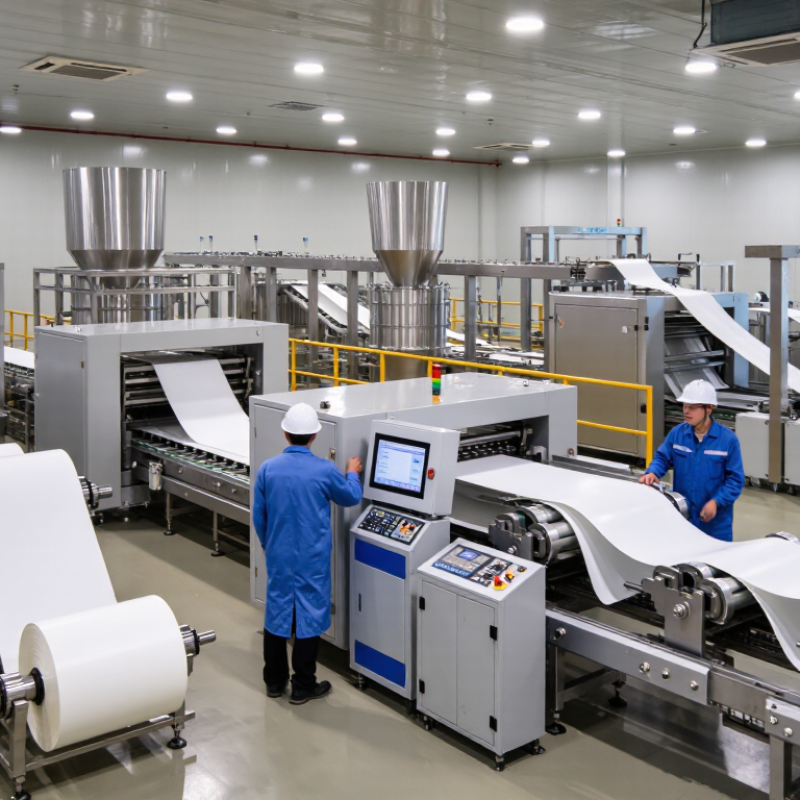
The Smithers report, The Future of Global Nonwovens to 2028, highlights continued growth in nonwoven production and stronger interest in specialty applications. This matters because wipe quality depends on more than softness. Fiber selection, basis weight, liquid retention, sealing strength, and microbial control all affect performance. A factory floor tells the story clearly. Operators inspect roll width, moisture distribution, and package seals before cartons leave the line.

Quality is measurable.

However, market rankings can be imperfect. Different reports use different product definitions, regional boundaries, and revenue calculations. Therefore, identifying China Top Non Woven Wet Wipes Manufacturers requires more than comparing factory size. Buyers should review certifications, production capacity, private-label experience, export records, testing procedures, and material traceability. ISO 9001 systems, documented quality controls, and compliance with destination-market requirements offer stronger evidence than promotional claims.

This guide examines leading Chinese manufacturers through those practical factors. It also considers biodegradable fibers, low-lint substrates, alcohol-free formulations, and packaging efficiency. Sustainability claims deserve careful checking. Not every “eco” label reflects a complete product life-cycle assessment. Manufacturers may offer strong pricing, yet consistency can still vary between batches. Reliable sourcing requires evidence, site communication, and continuous evaluation.
China Top Non Woven Wet Wipes Manufacturers

Overview of China's Nonwoven Wet Wipe Manufacturing Industry

China’s nonwoven wet wipe industry is supported by a broad base of spunlace and other nonwoven materials. The China Nonwovens and Industrial Textiles Association reported national nonwoven fabric output of about 8.14 million tonnes in 2023, showing the scale of the upstream supply network. That figure covers many applications, not wipes alone. Still, it helps explain why converters can source a range of fabric weights and compositions within China. In practice, a wipe’s feel depends on details such as fiber blend, bonding method, and sheet density. Small changes matter.

Manufacturers must also coordinate converting, liquid dosing, sealing, and packaging. The Smithers report The Future of Global Nonwovens to 2028 identifies hygiene and wipes as important nonwoven end-use markets, while Grand View Research estimates the global wipes market at about US$25.3 billion in 2023. These are global figures, not China-specific sales data. They indicate demand context, but cannot prove any factory’s capacity or quality. Buyers should check current production records, material specifications, and batch testing. A glossy sample is not enough. Supply chains can be efficient, yet consistency still needs verification.

How Nonwoven Wet Wipes Are Produced

China Top Non Woven Wet Wipes Manufacturers

How Nonwoven Wet Wipes Are Produced

A wet wipe begins as a dry nonwoven web, not as woven cloth. Manufacturers commonly use spunlace technology: high-pressure water jets entangle fibers on a moving belt, forming a soft, flexible sheet without conventional weaving. Fiber choice, web weight, and jet pressure shape the wipe’s strength and feel. Smithers’ industry report, The Future of Global Nonwovens to 2028, tracks growing demand for nonwovens across hygiene and related markets. That wider trend makes consistent web formation important, though it does not guarantee a better wipe.

After formation, the sheet is dried, slit, and cut into individual wipes. A measured lotion is added, then the wipes are folded and packed to limit moisture loss. Lotion recipes vary, but clean water quality, controlled dosing, and sealed packaging all matter. On a production line, even a small dosing variation can leave one wipe too dry and another too wet. It is not always easy to spot by looking.

Tips: Ask for specifications such as basis weight, tensile strength, and lotion add-on, then review samples from different production batches. Check that the wipe stays intact when pulled gently while wet. A neat sample is useful, but real-world testing is better. Manufacturers should also monitor fiber shedding and packaging seals; these checks can reveal issues that a product photo cannot.

China’s Nonwoven Wet Wipes Manufacturing Process

This chart shows a typical production sequence, from preparing fibers and forming a nonwoven web to bonding, converting, lotion application, and packaging. The vertical axis indicates process order only; it does not represent time, output, or market share. Specific steps may vary by substrate and product.

Types of Wet Wipes and Their Main Applications

China Top Non Woven Wet Wipes Manufacturers

Types of Wet Wipes and Their Main Applications

Wet wipes differ by intended use, liquid formulation, and nonwoven structure. Baby wipes are typically soft and moist, suited to gentle skin cleaning during diaper changes. Personal-care wipes include facial, hand, and intimate-care products. Their materials and lotions should match the intended area; one formulation does not fit every use.

Household wipes clean kitchen counters, bathroom surfaces, and other hard areas. Disinfecting wipes are designed for surface hygiene, while industrial wipes help remove oil, dust, or residue from tools and workstations. These categories can overlap, but their performance needs differ. A textured wipe may lift grime better, while a smoother sheet can feel gentler on skin. Always follow product directions, especially for contact time on surfaces.

Demand is broadening. Grand View Research estimated the global wet wipes market at USD 24.7 billion in 2023 and projected a 5.0% compound annual growth rate from 2024 to 2030 in its Wet Wipes Market report. This figure covers varied wipe types, not nonwoven materials alone. For buyers comparing manufacturers in China, check sheet strength, absorbency, lotion compatibility, and intended application. Packaging matters, too. A resealable pack can help limit drying, though it is not a substitute for suitable storage. The categories are useful, but never perfectly neat.

China Top Non Woven Wet Wipes Manufacturers - Types of Wet Wipes and Their Main Applications

Wet Wipe Type Common Nonwoven Substrate Typical Formulation Main Applications Key Product Considerations
Baby wipes Soft spunlace nonwoven, commonly made from polyester, viscose, or blended fibers Water-based lotion; may include mild cleansing agents and skin-conditioning ingredients Diaper changes and everyday cleaning of a baby’s hands and skin Softness, low-lint performance, skin compatibility, and packaging that helps retain moisture
Personal care and body wipes Spunlace nonwoven selected for softness and absorbency Water-based cleansing lotion, sometimes with moisturizers or fragrance Hand, face, and body cleansing when soap and water are not readily available Intended area of use, skin compatibility, wipe strength, and clear ingredient labeling
Facial cleansing and makeup-removal wipes Soft spunlace or other low-lint nonwoven fabric Water-based cleanser with ingredients chosen to help lift makeup, oil, and daily residue Removing makeup and cleansing the face as part of a personal-care routine Gentle texture, low lint, effective cleansing, and suitability for the intended skin type
Disinfecting surface wipes Durable spunlace or other nonwoven fabric compatible with the liquid formulation Formulated disinfectant; active ingredients and use directions vary by product Cleaning and disinfecting specified hard, nonporous surfaces Follow the product label for approved surfaces, contact time, handling, and regulatory requirements
Household cleaning wipes Absorbent spunlace or airlaid nonwoven Water-based cleaning solution, with ingredients selected for the intended cleaning task Wiping kitchen counters, appliances, and other household surfaces as directed Cleaning performance, wet strength, surface compatibility, and clear usage instructions
Industrial and workshop wipes Strong spunlace, airlaid, or other task-appropriate nonwoven May be dry or premoistened with a task-specific cleaning solution Wiping tools, equipment, and work surfaces; some products are designed for grease or oil removal Strength, absorbency, solvent compatibility where applicable, and suitability for the specific task
Flushable-labeled wipes Dispersible nonwoven designed to break apart under specified test conditions Water-based lotion, with formulation varying by intended use Personal cleansing products marketed for disposal by flushing where local guidance permits “Flushable” claims do not mean suitable for every plumbing or sewer system; follow the package and local disposal guidance
Pet grooming wipes Soft, durable spunlace nonwoven Water-based solution formulated for the product’s stated pet-care use Wiping paws, coat, or other areas specified on the product label Use only as directed; avoid eyes and other sensitive areas unless the label specifically permits use there

Leading Chinese Manufacturers and Their Capabilities

China Top Non Woven Wet Wipes Manufacturers: Leading Chinese Manufacturers and Their Capabilities

Chinese wet-wipe manufacturers typically combine nonwoven production, converting, lotion preparation, and packaging. Some operate spunlace lines and can adjust fabric weight, fiber blends, embossing, and sheet dimensions for different uses. This range matters: a soft, low-lint wipe for facial care needs different handling from a thicker household cleaning sheet. Smithers’ industry analysis, The Future of Global Nonwovens to 2028, tracks continued demand across hygiene and consumer applications. However, market growth alone does not prove a supplier’s quality. Buyers should verify line capacity, batch controls, and test results directly.

Capabilities vary. A factory may offer custom folding and flow-wrap formats, while another focuses on canisters or high-volume private-label orders. Ask for specifications covering basis weight, tensile strength, liquid loading, and package seal integrity. Request recent test records and a production sample from the same line proposed for your order. Small gaps matter. A wipe can feel fine in a sample but tear after lotion saturation. EDANA’s nonwovens market reporting provides useful sector context, yet factory-level audits remain essential for evaluating an individual manufacturer.

Tips: Compare suppliers using the same sample size and lotion formula. Check whether they can trace raw materials by batch, and confirm stated monthly capacity against actual equipment. One detail is easy to miss: packaging changes can affect wipe moisture retention. Recheck shelf-life evidence when the pack format changes.

Quality Standards and Sourcing Considerations

When sourcing from China’s non-woven wet wipes manufacturers, define the product before comparing quotations. Specify fabric weight, fiber composition, wipe dimensions, and lotion level. These details affect softness, strength, and cost. Ask for recent test reports that match the exact material and finished product, not a similar item.

Check applicable quality and safety requirements for the destination market. Request documented controls for incoming materials, production hygiene, batch traceability, and finished-product inspection. For wet wipes, verify pH, microbial limits, seal integrity, and compatibility between the lotion and packaging. Test samples after storage, too. A wipe may feel fine at the factory but dry out after weeks in a warm warehouse.

Look beyond certificates. Confirm their scope, validity, and issuing body, then compare them with production records. Ask how the manufacturer handles rejected batches and corrective actions. A video call can show equipment and packaging lines, but it cannot replace an independent audit when risk is high. Keep the specification and approved sample in writing. Small differences matter. One detail is easy to miss: “flushable” claims need careful substantiation and market-specific review. Suppliers may answer quickly, yet a vague answer is not evidence. Allow time for retesting; schedules sometimes slip.

Product Added

Go to Quote Request Form

Continue Product Search