What Are the 2026 Best Waterproof Connectors?

Selecting the best Waterproof Connectors in 2026 requires more than comparing IP ratings or product prices. MarketsandMarkets’ Electronic Connectors Market report identifies automotive electronics, industrial automation, and renewable energy as important growth areas. These applications expose connectors to rain, vibration, dust, salt, oil, and repeated movement. Grand View Research reports similar demand across automotive and industrial systems. The numbers are encouraging, but market reports rarely explain what happens inside a connector after years of field use.

Real experience matters here. A connector may survive a brief water spray yet fail after thermal cycling. A poorly compressed seal can admit moisture around the cable jacket. Corroded terminals may look clean from outside. They may still create unstable signals. This review therefore examines sealing design, contact materials, locking strength, cable compatibility, temperature range, and maintenance requirements. IEC 60529 provides the framework for IP classifications, but IP67 and IP68 do not guarantee identical immersion performance. Test conditions depend on the manufacturer.

Higher is not always better.

A connector rated for deep immersion may be unsuitable for frequent manual disconnection. A compact connector may save space but provide less strain relief. We will compare these practical trade-offs across automotive, outdoor lighting, marine equipment, factory controls, and solar installations. The assessment will reference manufacturer datasheets, recognized testing principles, and published industry research. It cannot reproduce every installation environment. That limitation deserves honesty. The best Waterproof Connectors are not simply the most expensive products; they are the ones that maintain electrical integrity under the exact moisture, pressure, movement, and service conditions they will face.
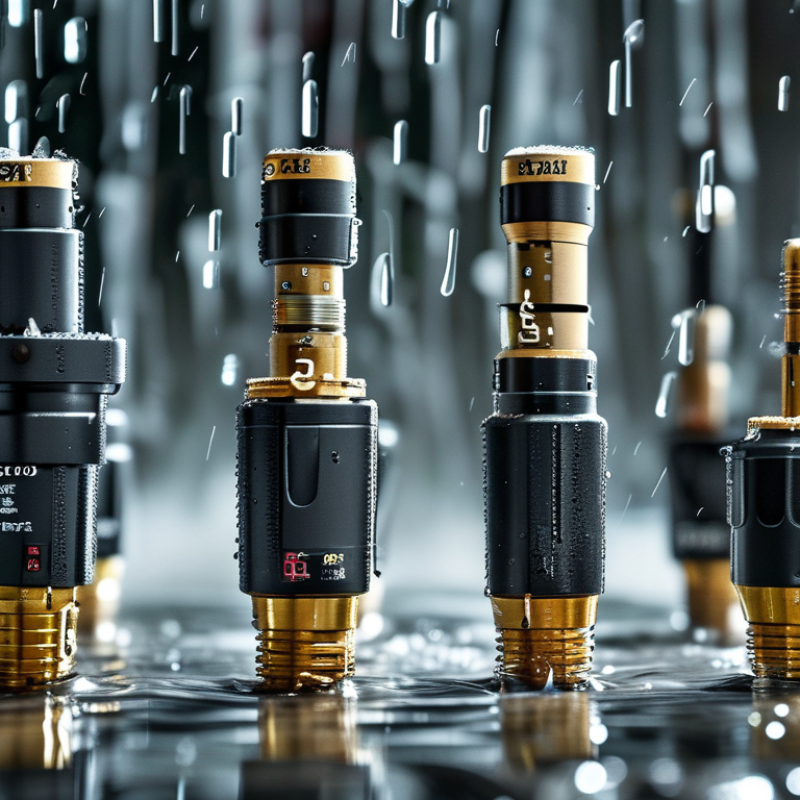
What Are the 2026 Best Waterproof Connectors?

What Makes a Connector Waterproof in 2026?

What Makes a Connector Waterproof in 2026?

A waterproof connector is not simply a connector with a rubber ring. It needs controlled sealing, secure locking, and verified resistance to water, dust, vibration, and temperature changes. IEC 60529 defines IP protection levels, but IP68 does not specify one universal depth or test duration. Manufacturers must state those conditions clearly. That detail matters in outdoor lighting, electric vehicles, marine equipment, and factory sensors. The 2024 MarketsandMarkets connector report valued the global connector market at about US$84 billion in 2023, showing the scale of demand for reliable connection systems. Yet market growth does not guarantee field reliability.

The best 2026 designs use molded seals, corrosion-resistant contacts, strain relief, and visible locking feedback. They also support traceable pressure or immersion testing during production. A small cut in a cable seal can let water reach the contacts after repeated bending. This is often missed. Engineers should also examine mating cycles, salt exposure, thermal expansion, and installation errors. A high IP rating cannot repair poor assembly. That remains a common weakness.

Tips: Check the complete IP test condition, not only the rating. Match the connector to cable diameter precisely. Inspect seals after installation. Leave no sharp bend near the entry point. For critical systems, request test records and sample-based verification. A connector may pass a laboratory test yet fail after months of movement, dirt, and careless maintenance.

Key Waterproof Ratings, Materials, and Design Standards

The 2026 best waterproof connectors should be judged by ratings, materials, and verified testing. Appearance alone proves little.

IEC 60529 defines IP67 as dust-tight protection and immersion at one meter for 30 minutes. IP68 requires deeper or longer immersion, but the manufacturer must state the conditions. IPX9K adds protection against powerful, heated water jets under ISO 20653. These ratings describe laboratory tests, not every real installation.

A 2024 International Energy Agency report recorded more than 17 million electric-car sales worldwide. That growth increases demand for connectors exposed to rain, road spray, salt, and vibration.

Materials decide whether protection lasts. PA66 and PBT housings provide useful strength and dimensional stability. PPS performs better near heat and aggressive chemicals. Silicone seals remain flexible across wide temperature changes, while fluorosilicone resists fuels more effectively.

Nickel-plated brass contacts can balance conductivity and corrosion resistance. Stainless steel is stronger, but often costs more. Field inspections frequently find damaged seals, not failed terminals.

Small cuts matter.

Select connectors tested under IEC 61984, IEC 60068 environmental procedures, and relevant enclosure requirements such as NEMA 4X. Ask for test conditions, mating cycles, cable sizes, and salt-spray results. Do not accept “waterproof” without evidence.

A connector rated IP68 may still fail after poor crimping or repeated bending. This is the uncomfortable detail. Standards help, but installation quality remains imperfect. Temperature cycling, pressure changes, and trapped moisture deserve testing before production.

The Main Types of Waterproof Connectors and Their Applications

What Are the 2026 Best Waterproof Connectors?

Waterproof connectors are not one product category. Their design depends on water pressure, vibration, current, and service access. Circular connectors, including compact M12 types, suit sensors, factory equipment, and outdoor automation. Rectangular sealed connectors handle denser wiring in vehicles and control cabinets. Cable glands protect cable entries where a connector is unnecessary. They are simple, but often overlooked.

The IEC 60529 standard defines IP protection levels, from limited dust protection to continuous water immersion. IP67 supports temporary immersion, while IP68 requires conditions stated by the manufacturer. A 2024 market analysis by MarketsandMarkets estimated high-single-digit annual growth for waterproof connectors through 2029. Grand View Research valued the broader electrical connector market above 80 billion dollars in 2023. The numbers indicate strong demand, not automatic quality.

Field inspections often reveal failures at the cable seal, not the contact pins. In a wet agricultural cabinet, a poorly tightened gland can admit water within weeks. Marine equipment usually needs corrosion-resistant contacts and stronger locking systems. Solar installations favor UV-resistant materials and quick field servicing. Harsh vibration changes the choice again. Threaded couplings are slower, but more secure. Push-fit designs save time.

Selection should match the actual environment. IP ratings alone do not measure salt spray, chemicals, or repeated bending. I have seen teams choose a higher IP rating and still ignore strain relief. That is a costly mistake. Test the complete assembly, including the cable, seal, enclosure, and mating cycle. Perfect specifications can still fail in imperfect installation.

What Are the 2026 Best Waterproof Connectors? — The Main Types of Waterproof Connectors and Their Applications
Connector Type Typical Waterproofing Method Common Protection Level Typical Contact Arrangement Key Strengths Best-Fit Applications Important Selection Considerations
Circular Push-Pull Connector Sealed plug and receptacle with an O-ring, gasket, or compression seal IP65–IP68 Signal, power, or mixed contacts; commonly 2–20+ contacts
  • Fast tool-free mating
  • High connection density
  • Suitable for frequent service access
Medical equipment, measurement instruments, outdoor cameras, portable test systems, and industrial sensors Verify the unmated rating, mating-cycle life, cable diameter range, and whether the locking system can resist vibration.
Threaded Circular Connector Threaded coupling ring compresses seals between the plug and receptacle IP67–IP69K Usually 2–12 contacts for power or signal; larger versions support more
  • Strong mechanical retention
  • Good resistance to vibration
  • Broad availability in sensor and automation formats
Factory automation, robotics, motor feedback, industrial control panels, and outdoor machinery Check thread size, coding, shielding continuity, torque requirements, and the connector’s resistance to repeated washdown.
Bayonet-Lock Circular Connector Quick-lock bayonet coupling combined with a gasket or O-ring seal IP65–IP68 Power, signal, coaxial, or mixed-contact configurations
  • Rapid quarter-turn mating
  • Reliable retention under moderate vibration
  • Fast installation where access is limited
Transportation equipment, lighting systems, audio equipment, mobile machinery, and field instruments Confirm the coupling position, keying system, environmental temperature range, and contact current derating.
Overmolded Cable Connector Factory-molded elastomer or thermoplastic body permanently seals the cable-to-connector transition IP67–IP69K Fixed contact count and cable length; power or signal conductors
  • Excellent strain relief
  • Reduced risk of cable-entry leakage
  • Consistent production sealing
Outdoor LED lighting, vehicle harnesses, pumps, agricultural equipment, and exposed sensors Choose the correct cable jacket, bend radius, UV resistance, chemical resistance, and repair strategy because the cable assembly is not normally field-replaceable.
Waterproof Wire-to-Wire Connector Individual wire seals and a cavity seal inside a locking housing IP65–IP68 Typically 1–12 circuits; power, ground, or low-voltage signal
  • Compact inline connections
  • Useful for harness assembly
  • Often available with polarization and secondary locks
Automotive harnesses, marine wiring, battery systems, outdoor lighting, and agricultural machinery Use the specified crimp terminals and wire insulation diameter; incorrect crimp height or seal size can compromise water resistance.
Waterproof Wire-to-Board Connector Sealed plug-to-header interface with perimeter gasket, cavity seals, or a sealed housing IP65–IP67 Low-voltage signal or power; commonly 2–20 contacts
  • Connects external wiring directly to a PCB
  • Supports compact control assemblies
  • Can combine polarization and latching features
Outdoor control units, smart lighting, building automation, sensors, and compact industrial electronics The enclosure, PCB coating, cable entry, and board-side seal must be evaluated together; a sealed connector alone does not waterproof the whole assembly.
Waterproof USB Connector Sealed panel interface, gasketed cap, or sealed backshell around a standard USB contact system IP65–IP67 when properly mated or capped USB 2.0, USB 3.x, or USB-C contact layouts depending on design
  • Supports data and low-power charging
  • Familiar interface for service equipment
  • Available for panel and cable mounting
Outdoor displays, kiosks, instrumentation, marine electronics, and industrial service ports Check data speed, power-delivery capability, EMI shielding, cap retention, and whether the rating applies only while the cover is closed.
Waterproof Ethernet Connector Sealed RJ-style or circular interface with gasketed coupling and cable-entry seal IP65–IP68 Twisted-pair Ethernet; commonly rated for 10/100/1000BASE-T depending on design
  • Maintains network connectivity in exposed locations
  • Supports remote monitoring and control
  • Available in rugged field-installable formats
Security cameras, access control, outdoor wireless equipment, industrial networks, and transportation systems Verify category performance, shielding, PoE current capability, bend radius, and compatibility with the selected cable diameter.
Waterproof Coaxial Connector Threaded or bayonet coupling with a gasket and sealed cable termination IP65–IP67 Single coaxial signal path
  • Controlled impedance for RF signals
  • Effective shielding when correctly terminated
  • Suitable for antenna and video links
Outdoor antennas, radio equipment, surveillance video, navigation systems, and wireless infrastructure Match impedance, frequency range, return loss, cable type, and sealing method; water ingress can significantly increase RF loss.
High-Current Sealed Connector Large-gauge wire seals, robust housing, and a positive mechanical lock IP65–IP67 Usually 1–8 power contacts; current depends on terminal size and wire gauge
  • Handles elevated current and voltage
  • Provides strong cable retention
  • Suitable for demanding mobile environments
Battery packs, electric vehicles, industrial power distribution, inverters, pumps, and mobile machinery Select by continuous and peak current, voltage, temperature rise, short-circuit requirements, creepage, clearance, and wire-size range.
Magnetic Waterproof Connector Spring-loaded magnetic contacts with a gasketed mating surface or sealed housing IP54–IP67 Low-voltage power, charging, or simple signal contacts
  • Quick blind mating
  • Can disconnect under excessive pull to protect equipment
  • Convenient for removable modules
Portable instruments, wearable equipment, charging docks, compact consumer devices, and modular control panels Check magnetic debris attraction, contact exposure, misalignment tolerance, charging current, and whether the rating requires a fully aligned connection.
Submersible Connector Multiple compression seals, pressure-rated housing, and specialized potting or molded interfaces IP68; depth rating must be specified separately Low-voltage power, sensor, or data contacts
  • Designed for prolonged immersion
  • Supports underwater instrumentation
  • Can be engineered for pressure and corrosion exposure
Water-quality monitoring, remotely operated equipment, marine robotics, wells, reservoirs, and underwater cameras IP68 does not define one universal depth or time; confirm the tested immersion depth, duration, pressure, water chemistry, and mating condition.
Industrial Fieldbus Connector Threaded or quick-lock housing with seals around the contacts and cable entry IP65–IP67 Protocol-specific signal contacts, often 2–8 or more
  • Supports deterministic industrial communication
  • Often includes coding and shielding options
  • Built for automation environments
Programmable controllers, distributed I/O, motor drives, robotic cells, and process automation Confirm protocol compatibility, impedance, shielding and grounding, transmission speed, vibration resistance, and maximum cable length.

How to Choose the Best Waterproof Connector for Your Needs

What Are the 2026 Best Waterproof Connectors?

How to Choose the Best Waterproof Connector for Your Needs

The best waterproof connector depends on its environment, not its marketing label. Start with the required IP rating. IP67 suits temporary immersion, while IP68 conditions vary by manufacturer. Check the tested depth and duration carefully. A connector for outdoor lighting may need UV resistance, while marine equipment needs protection against saltwater corrosion. Temperature, vibration, cable size, and current capacity also matter. A compact housing is convenient, but limited contact spacing may reduce performance under heavy loads.

In field installations, sealing quality often matters more than appearance. Look for durable gaskets, secure locking systems, and strain relief that matches the cable jacket. Inspect the contact material and plating, especially in humid locations. I have seen a well-rated connector fail because the cable was bent sharply beside the seal. Small installation errors can defeat strong engineering. I also used to assume that higher IP ratings solved every problem. They do not. Repeated mating, dirt, and aging can change protection over time.

Tips: Match the connector to the real cable diameter. Test one assembled sample before ordering in bulk. Keep spare seals available. Avoid forcing a lock that feels uneven. Record the installation date and inspection results.

Top Performance Factors to Compare Before Buying

What Are the 2026 Best Waterproof Connectors?

Top Performance Factors to Compare Before Buying

The best waterproof connector is not defined by appearance alone. Check its IP rating, but read the test conditions carefully. An IP68 rating may describe temporary immersion, not permanent underwater use. The connector must also remain sealed when cables move, bend, or vibrate. In practical inspections, damaged gaskets often cause more failures than poor electrical contacts. Look for durable sealing materials that tolerate heat, cold, oil, and outdoor sunlight.

Electrical performance deserves equal attention. Compare rated voltage, current capacity, contact resistance, and temperature rise under load. A compact connector may fit neatly but overheat when carrying continuous current. Pin plating also matters because corrosion can increase resistance over time. Check the expected mating cycles. A connector used weekly needs stronger mechanical endurance than one installed once. Small details matter here.

Installation quality can change the result. Confirm cable diameter ranges before ordering. An incorrect seal size can defeat an excellent design. Strain relief should hold the cable without crushing its insulation. For harsh environments, review vibration, salt spray, and chemical-resistance testing against recognized standards. Laboratory results help, but they do not reproduce every field condition. That limitation is easy to overlook. When comparing options, request test reports, installation instructions, and traceable material information. A lower purchase price may become expensive after repeated replacements.

Product Added

Go to Quote Request Form

Continue Product Search