
China Top 10 Sign Manufacturing Technologies for Buyers
China’s sign manufacturing technology market is becoming more capable, automated, and demanding. Buyers now compare CNC routing, laser cutting, LED modules, UV printing, digital signage, and sustainable substrates. Each choice affects brightness, edge quality, installation time, energy use, and long-term maintenance.
Grand View Research valued the global digital signage market at approximately USD 27.2 billion in 2022. Its report projected an 8.1% compound annual growth rate from 2023 to 2030. Smithers’ report, The Future of Digital Print for Signage to 2028, also identifies digital printing as a major growth area. These figures show strong momentum, but they do not guarantee every supplier delivers consistent quality. Samples still matter. A glossy sample may hide weak adhesion, uneven illumination, or poor color stability.
Design authority Robert Venturi wrote, “I think that signs are more important than architecture,” in Learning from Las Vegas. His observation remains relevant for buyers evaluating sign manufacturing technology today. A sign must attract attention, communicate quickly, and survive real conditions. This guide examines China’s ten leading technologies through a practical purchasing lens. It considers production accuracy, material compatibility, customization, safety, operating cost, and after-sales support. Factory audits, technical drawings, warranty terms, and independent testing should support every decision. No ranking is perfect. Weather, local installation skills, and project scale can change the best option. A low initial price may become expensive after fading, repairs, or replacement. Smart buyers inspect the process, not only the finished sign.
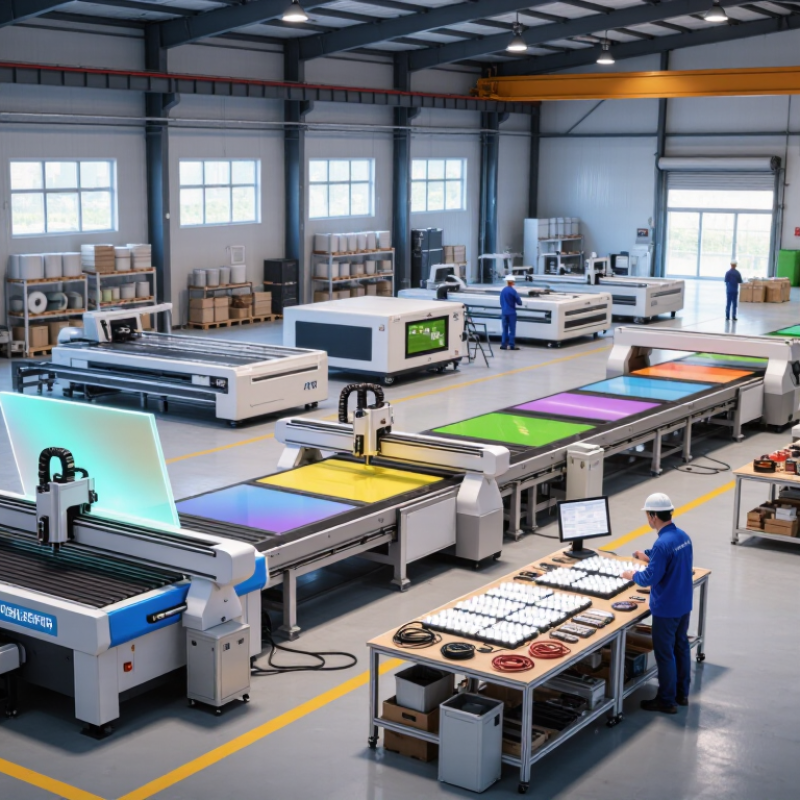
Table of Contents
[Hide]
Understanding China’s Sign Manufacturing Technology Landscape
China’s sign manufacturing landscape now combines traditional fabrication with digital control. The leading ten technologies include CNC routing, laser cutting, vacuum forming, acrylic bending, UV printing, channel-letter production, LED integration, metal welding, digital signage, and automated finishing. Each serves a different buying need. CNC routing gives clean edges on acrylic and aluminum, while UV printing supports short runs with detailed graphics. Some factories still rely heavily on manual polishing. That can create variation between samples and bulk orders.
Grand View Research valued the global digital signage market at about USD 27.1 billion in 2023. It forecasts an 8.1% compound annual growth rate from 2024 to 2030. This growth is influencing Chinese suppliers to connect display hardware, software, sensors, and remote content management. Buyers should inspect brightness, heat dissipation, viewing distance, and power consumption. A bright screen is not automatically an efficient one. Smithers’ digital print industry research also highlights continued demand for customized, shorter-run graphics. That supports flexible UV and latex-style production lines.
Factory visits reveal practical differences. Ask for a live cut sample, not only polished photographs. Measure edge tolerance, color consistency, weld marks, and adhesive coverage. Check whether LEDs are replaceable without damaging the sign face. Request aging, moisture, and thermal test records. ISO 9001 certification may support process discipline, but it does not guarantee every shipment. I have seen attractive prototypes fail because mounting holes shifted by a few millimeters. Buyers should compare approved samples with random production pieces. Small details matter.
China Top 10 Sign Manufacturing Technologies for Buyers - Understanding China’s Sign Manufacturing Technology Landscape
| No. | Manufacturing Technology | Typical Materials | Typical Working Size or Capability | Finish and Detail Performance | Typical Durability | Common Sign Applications | Indicative Production Lead Time | Key Buyer Consideration |
|---|---|---|---|---|---|---|---|---|
| 1 | CNC Routing and Engraving | Aluminum, acrylic, PVC foam board, MDF, wood, stainless steel and composite panels | Commonly used for panels up to approximately 1,220 × 2,440 mm per sheet; larger formats can be assembled | Accurate cutting, recessed lettering, bevels, pockets and dimensional relief; suitable for rigid substrates | Approximately 3–10 years outdoors, depending on material, coating and installation conditions | Dimensional logos, reception signs, routed lettering, wayfinding panels and carved plaques | About 5–12 working days after artwork approval | Confirm cutting tolerance, edge quality, dust removal, substrate flatness and whether secondary finishing is included |
| 2 | Laser Cutting and Laser Engraving | Acrylic, wood, paperboard, fabric, thin stainless steel and coated metal sheets | Often used for sheet materials up to approximately 1,500 × 3,000 mm; thickness depends on material and laser power | Very fine contours, small text, perforations and clean engraving; heat-sensitive materials may show edge discoloration | Approximately 3–8 years outdoors when suitable outdoor-grade materials and protective finishes are used | Decorative screens, small lettering, acrylic signs, illuminated components and intricate patterns | About 4–10 working days for standard designs | Check maximum thickness, heat-affected edges, ventilation practices and whether the selected material is laser-compatible |
| 3 | UV Flatbed Digital Printing | Acrylic, aluminum composite panels, aluminum, PVC, glass, wood and coated boards | Commonly supports sheets around 1,220 × 2,440 mm or larger depending on equipment configuration | High-resolution full-color output, white ink and selective gloss effects are possible; direct printing reduces lamination steps | Approximately 3–7 years outdoors; protective coating or lamination can improve resistance to abrasion and weathering | Retail graphics, interior signs, directional panels, exhibition graphics and short-run custom signage | About 3–8 working days after color and artwork approval | Request a substrate adhesion test, outdoor exposure specification, color proof and information about white-ink coverage |
| 4 | Solvent, Eco-Solvent and Latex Digital Printing | Self-adhesive vinyl, banner fabric, mesh, window film and flexible sign media | Roll widths commonly range from approximately 1.37 to 3.20 m, depending on equipment | Good photographic color and scalable graphics; eco-solvent and latex systems generally reduce odor compared with traditional solvent systems | Approximately 1–5 years outdoors without additional protection; overlamination can extend service life | Vehicle graphics, banners, wall graphics, window decals, temporary campaigns and large-format displays | About 2–7 working days, depending on finishing and quantity | Specify ink technology, laminate type, fire rating, expected exposure period, installation surface and removal requirements |
| 5 | Screen Printing | Aluminum, acrylic, glass, PVC, fabric, corrugated plastic and coated metal | Suitable for flat products and repeat runs; practical sheet size depends on the printing table and curing system | Strong solid-color coverage, consistent spot colors and good ink thickness; less economical for highly detailed variable graphics | Approximately 3–10 years outdoors when outdoor-rated inks and suitable substrates are used | Repeated sign panels, industrial labels, parking signs, promotional boards and uniform branding components | About 7–15 working days because screens and setup are required | Most cost-effective for medium to large quantities with limited colors; confirm color matching, curing and registration tolerance |
| 6 | Built-Up Channel Letter Fabrication | Aluminum, stainless steel, acrylic faces, polycarbonate, LED modules and painted metal returns | Individual letters commonly range from approximately 150 to 1,500 mm in height, subject to design and transport limits | Three-dimensional lettering with returns, halo illumination, face illumination or non-illuminated construction | Approximately 5–12 years outdoors; LED and power-supply life depend on ventilation, loading and environmental conditions | Building facades, retail fronts, hospitality signs, shopping centers and corporate identification | About 12–25 working days, including fabrication, wiring and testing | Confirm letter depth, IP protection, electrical certifications, mounting method, access for maintenance and packing protection |
| 7 | Vacuum Forming and Thermoforming | ABS, acrylic, polycarbonate, PETG and other thermoplastic sheets | Typically used for formed faces or housings up to approximately 1,200 × 2,400 mm; tooling size controls the final form | Creates curved faces, domes, dimensional panels and consistent repeated shapes; tooling marks and draft angles must be managed | Approximately 3–8 years outdoors with UV-stable sheet material and suitable paint or protective coating | Illuminated sign faces, molded logos, display housings, architectural features and custom three-dimensional signs | About 15–30 working days, including mold preparation and sample approval | Review mold ownership, wall-thickness variation, minimum draft angle, color consistency and replacement-part availability |
| 8 | LED Neon-Flex Sign Fabrication | Silicone or PVC LED neon-flex, acrylic backboards, aluminum profiles, wiring and low-voltage power supplies | Commonly produced in flexible runs with minimum bend radii specified by the selected product; large signs are assembled in sections | Continuous luminous appearance with flexible routing; brightness and color uniformity depend on LED spacing, diffuser design and voltage stability | Approximately 3–8 years outdoors when outdoor-rated components and sealed connections are used | Decorative wall signs, hospitality interiors, storefronts, event signage and architectural accent lighting | About 10–20 working days, including wiring and illumination testing | Check IP rating, bend radius, cut increments, power-supply reserve, dimming compatibility and heat dissipation |
| 9 | Metal Fabrication, Welding and Powder Coating | Aluminum, galvanized steel, mild steel, stainless steel and architectural metal profiles | Suitable for frames, cabinets and large structures; final size is mainly limited by material handling, transport and installation access | Provides rigid support structures, folded trays, cabinets and durable colored finishes; welds may require grinding or visible-finish treatment | Approximately 5–15 years outdoors; service life depends on metal grade, pretreatment, coating system and coastal exposure | Monument signs, pylon structures, sign cabinets, mounting frames and architectural signage | About 10–25 working days, depending on engineering and coating requirements | Specify steel grade, corrosion protection, coating thickness, weld finish, drainage, structural calculations and installation hardware |
| 10 | Chemical Etching, Anodizing and Engraved Metal Marking | Stainless steel, anodized aluminum, brass, copper and coated metal plates | Generally used for thin metal plates and detailed nameplates; plate size depends on the etching or marking line | Sharp permanent text, fine line work and high contrast; anodized aluminum can support color-filled engraving and durable surface marks | Approximately 5–15 years outdoors, depending on metal grade, surface treatment and exposure conditions | Equipment labels, room identification, regulatory plates, asset tags and premium interior signage | About 7–18 working days, including proofing and surface treatment | Confirm text permanence, corrosion resistance, plate thickness, readability at viewing distance and required compliance markings |
Buyer note: Lead times, dimensions and service-life estimates are typical industry ranges rather than guarantees. Final results depend on artwork complexity, material grade, climate, exposure, electrical requirements, packaging and installation quality.
Related Posts
-
China Best Sign Design Technology Innovations and Trends?
-
Essential Tips for Effective Sign Design Technology?
-

10 Essential Tips for Enhancing Urban Traffic Safety
-
How to Choose the Right Reflective Traffic Signs for Your Needs?
-
How to Implement Effective Road Safety Solutions for Everyone?
-
What Are the Top Sign Fabrication Services in 2026?